History
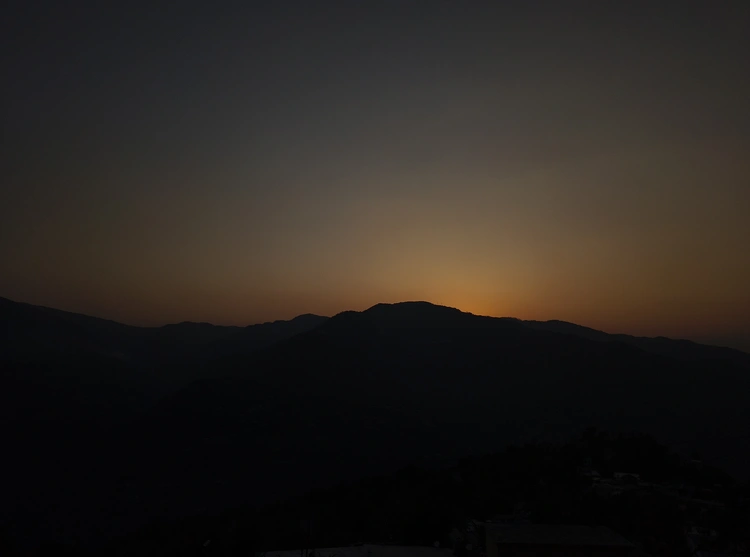
Garhwal Himalayas
The royal dynasty of Garhwal began with Kanak Pal. The Garhwal kingdom was founded in 823 AD when Kanak Pal, a prince from Malwa (present-day Madhya Pradesh), was on a pilgrimage to the Badrinath temple. He met Raja Bhanu Pratap, the ruler of Chandpur Garhi, one of the 52 forts of Garhwal. Raja Bhanu Pratap had no son. The king married his only daughter to the prince and later handed over his kingdom and the fort city. Kanak Pal and his descendants of the Panwar dynasty gradually conquered all the independent forts (garhs) belonging to their 52 petty chieftains, and for the next 916 years, until 1804 AD, ruled over the entire Garhwal kingdom.
Medieval
In 1358, the 37th ruler, Ajay Pal, brought all the small principalities of the Garhwal region under his rule and established the Garhwal kingdom with Devalgarh as his capital, which he later shifted to Srinagar. Balbhadra Shah (reigned 1575-1591) was the first king of Garhwal to use the title of Shah. The capital was shifted to Srinagar by Mahipat Shah, who ascended the throne in 1622, and he consolidated his rule over most of Garhwal, although he died prematurely in 1631. His seven-year-old son, Prithvi Shah, succeeded him, but the state was ruled for many years by Mahipat Shah's wife, Rani Karnavati. During this time, she successfully defended the state against invaders and repelled an attack by a Mughal army led by Najabat Khan in 1640. She eventually earned the nickname 'Nakati Rani' (the queen who cuts noses) because she would cut off the noses of any invaders who attacked the state, as the Mughal invaders of the time discovered. [6]
The next significant ruler was Fateh Shah, who reigned as the Raja of Garhwal from 1684 to 1716, and is best known for participating in the Battle of Bhangani on September 18, 1688, where a combined army of several kings of the Shivalik Hills (Pahari Rajas) fought against the forces of the 10th Sikh Guru, Guru Gobind Singh. During his reign, Ram Rai, the exiled eldest son of the Sikh Guru Har Rai, settled here on the recommendations of Aurangzeb, which eventually led to the founding of the city of Dehradun. Fateh Shah died in 1716, and his son Upendra Shah died within a year of ascending the throne in 1717. He was succeeded by Pradip Shah, during whose reign the state prospered, attracting invaders such as Najib-ud-Daula, the governor of Saharanpur, who attacked with his Rohilla army in 1757 and captured Dehradun. [citation needed] However, in 1770, the Garhwali forces defeated the Rohillas and recaptured the Dun region. In 1791, the Gorkha armies of the Kingdom of Nepal invaded Kumaon and seized control of most of the hill territories, driving out or subjugating most of the rulers.[9] The twelve-year Gorkha occupation (Gorkhyani)
When the Gorkhas began their twelve-year rule over the Garhwal region, the King of Garhwal fled to British territory.
The Gorkhas ruled Garhwal with an iron fist. Their excessive tax policies, unjust judicial system, slavery, atrocities, and lack of a proper administrative system made the Gorkha rulers highly unpopular among their subjects. Agriculture declined rapidly, and villages became deserted. During the Gorkha rule, a revenue settlement was carried out for Garhwal in 1811. The rates were so high that landlords found it difficult to pay them, and the Gorkhas sold hundreds of family members into slavery to recover the arrears. If a person or their family members were not bought as slaves at auction, such people were sent to Bhimgoda near Har Ki Pauri in Haridwar to be sold. It is said that the Gorkhas established a slave market at the slave bazaar in Haridwar. Harak Dev Joshi, a prominent minister of the Kumaon court, wrote to Fraser, who was residing in Delhi, describing the atrocities committed by the Gorkhas on the Garhwali people. The British writer and explorer Captain F.V. Raper (of the 10th Bengal Native Infantry) recorded an eyewitness account in Asiatic Researches (Volume XI):
Below the pass leading from Har Ki Pauri is a Gorkha 'chowki' or post, where slaves are brought down from the mountains and kept for sale. Hundreds of these poor people, of both sexes, from three to thirty years of age, are annually sold in this manner. These slaves are brought...